





Kakadu National Park in the Northern Territory of Australia is one of the most culturally rich landscapes on earth. With over 5,000 documented rock art sites spread across its vast square kilometres of rugged terrain it’s a powerful testament to the depth of Aboriginal life, history and storytelling. These ancient rock arts, etched onto rock walls and nestled in rock shelters are an irreplaceable part of the world’s cultural and scientific record.
Contents
Aboriginal Culture
The rock art of Kakadu is not just decoration – it’s a complex, layered record of Aboriginal culture and ceremonial life over 20,000 years. These paintings were created by Aboriginal artists as a form of visual storytelling, passing down creation stories, survival knowledge and Dreaming narratives through generations. Each rock painting reveals something different – animal tracks and lightning storms to white people during early colonial contact. These ancient artworks are a fascinating record of the everyday and the spiritual – naturalistic paintings and symbolic stick figures.
Some of the most famous paintings are at Ubirr and Nourlangie, rock art galleries open to visitors. These sites have layers of paintings – the work of individual artists over centuries – making them archaeological sites for research and cultural education.
Comparison of Major Rock Art Sites
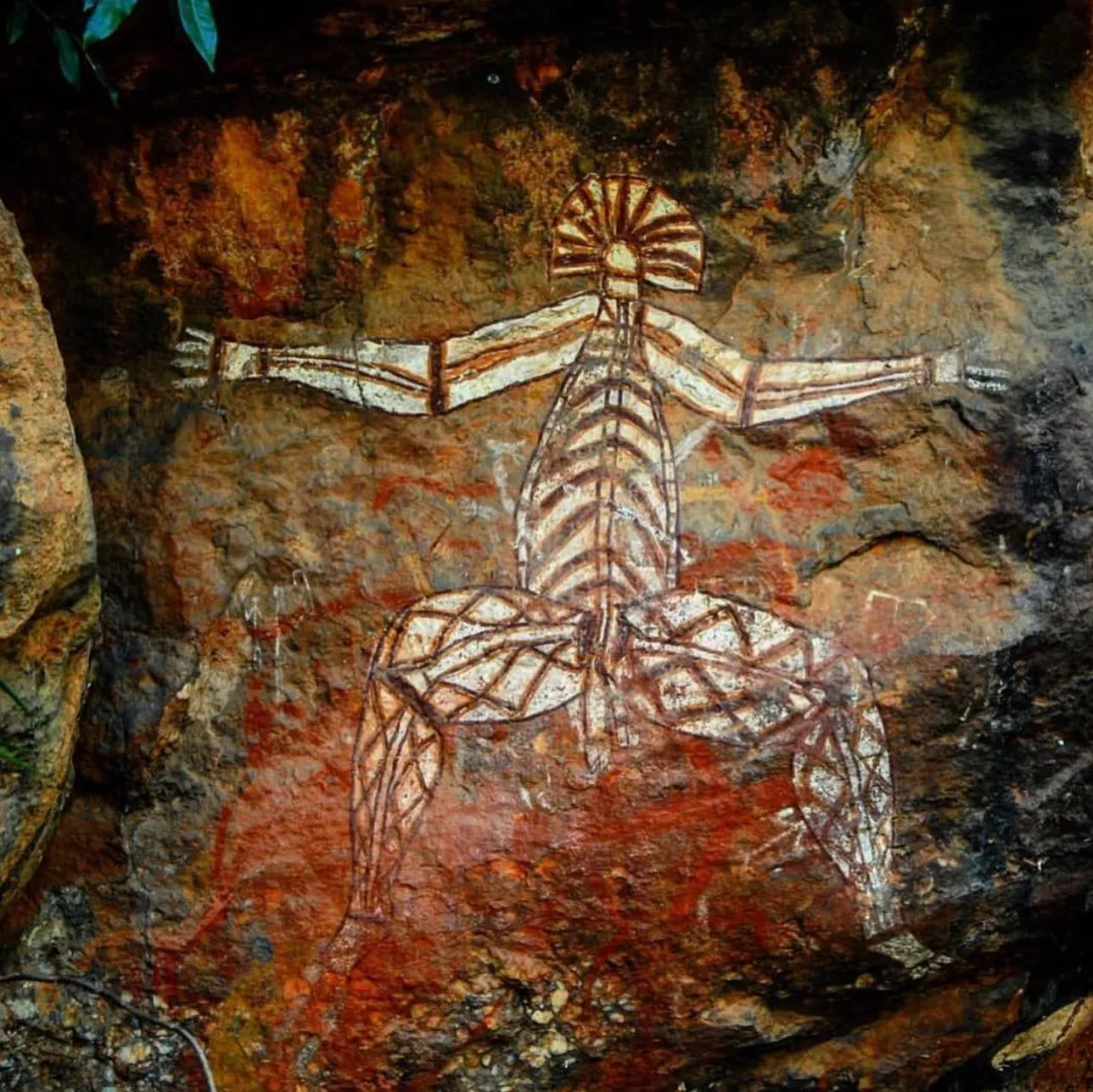
Here is a table of Kakadu’s most well-known rock art sites:
| Rock Art Site | Key Features | Best Time to Visit | Accessibility |
|---|---|---|---|
| Ubirr | Paintings of animals, creation stories, and contact with Europeans | Dry season | Easy walk, the lookout is accessible |
| Nourlangie | Ancestral beings, naturalistic human figures, sacred sites | Dry season | Boardwalk and interpretive signs |
| Nanguluwur | X-ray art, stick figures, hand stencils | Dry season | Short hike required |
These show the variety of Kakadu’s rock art, from public story to sacred imagery.
Types of Rock Art and Artistic Techniques
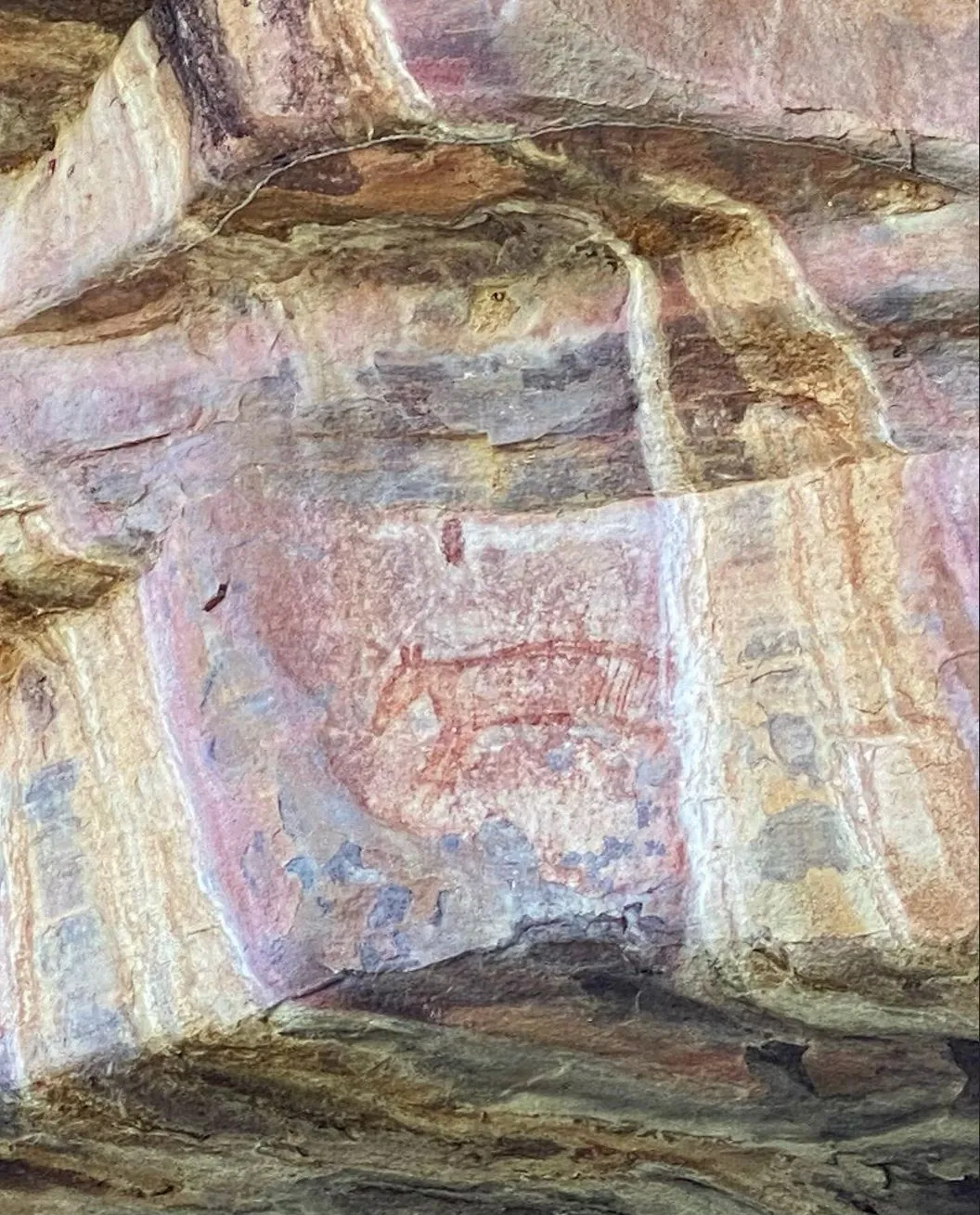
Kakadu’s rock art includes many types of rock art, from x-ray paintings of fish and turtles to figurative depictions of ancestral spirits and mythical beings. Some paintings are detailed and naturalistic, showing human figures, animals and tools. Others are more symbolic, using simple lines to represent movement, emotion or ritual.
Artists used mineral pigments mixed on a stone palette, often applying the paint with brushes made from human hair or reeds. The rock surfaces themselves — from smooth sandstone to the crevices of rock shelters — were chosen not only for their visibility but also for their spiritual significance. These rock galleries were, and still are, sacred sites used in rituals and for cultural education.
The Role of Rock Art in Aboriginal Life
For the Bininj/Mungguy people of the region, rock art is more than an art form. It’s cultural identity, law and responsibility. Each painting is a public story or private ceremony, a marker of land ownership or a sacred narrative passed down through oral tradition. These artworks contain knowledge about the dry season and wet season cycles, food sources, kinship systems and moral codes.
Some rock art sites are off-limits to the public, reserved for initiated individuals and sacred rituals. This ongoing history of art-making connects the past to the present, allowing Aboriginal culture to thrive in the face of modern challenges.
Scientific and Educational Importance
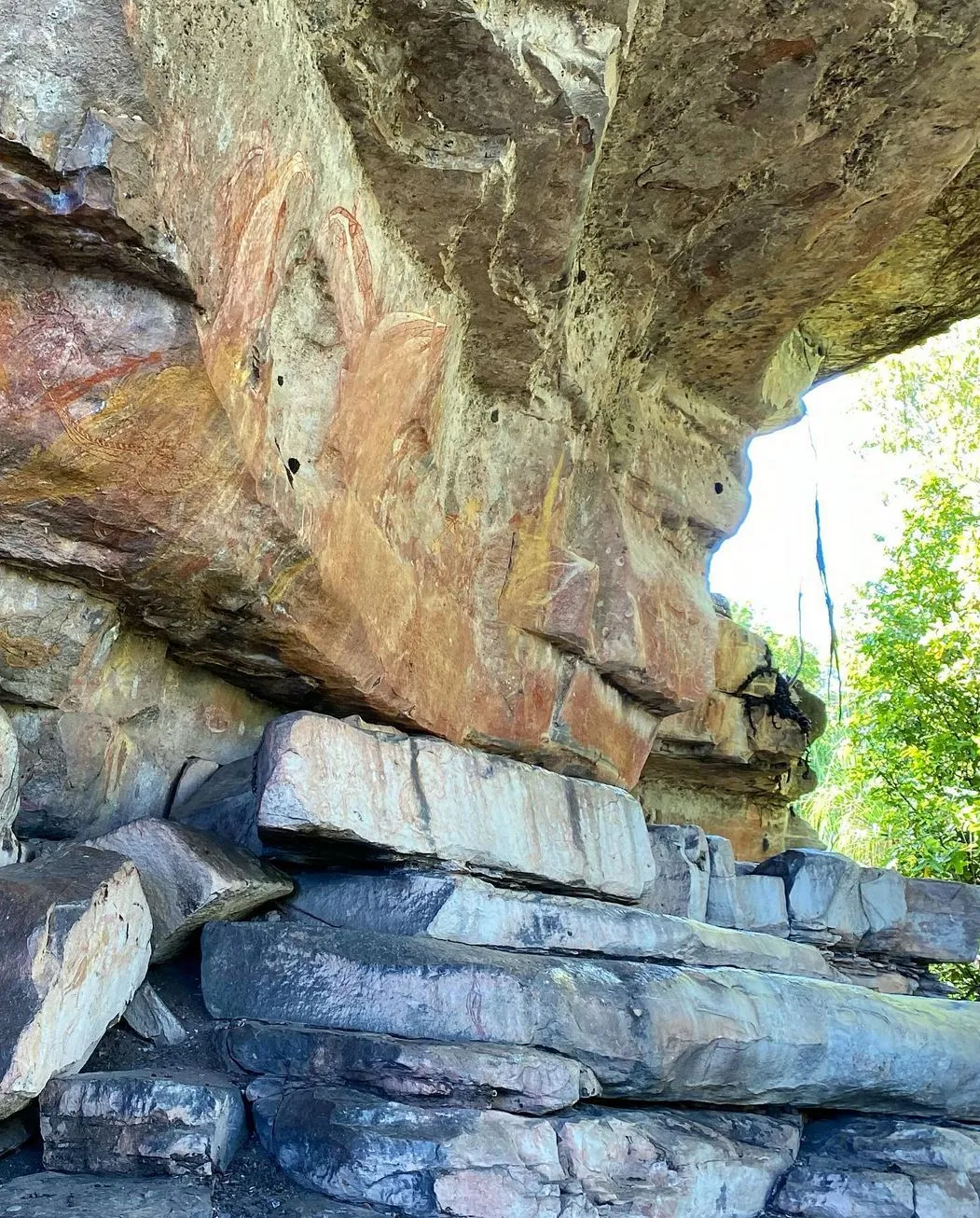
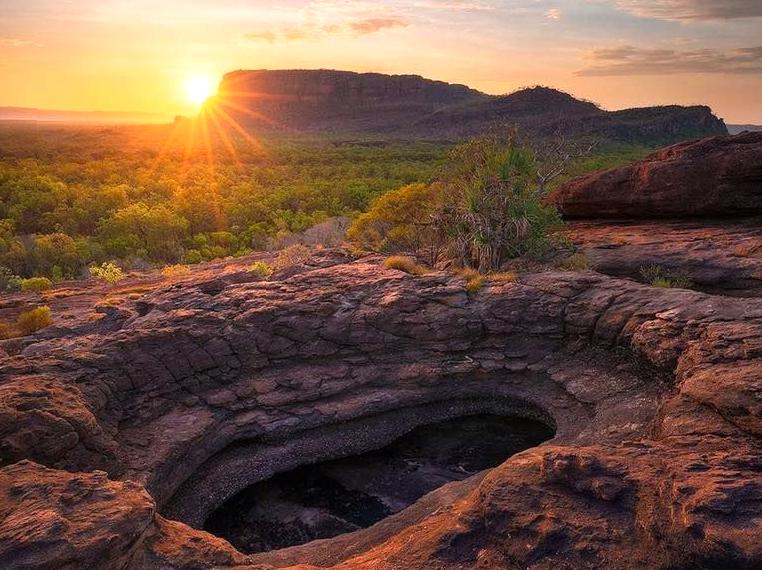
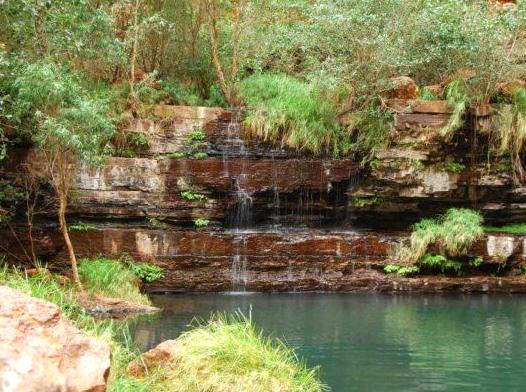


From a scientific perspective, Kakadu’s rock art provides valuable data on human occupation in northern Australia. Archaeological evidence from surrounding areas — tools, campfires and animal bones — complements the visual narratives on the rock walls. This evidence supports at least 65,000 years of continuous human habitation in the region.
Researchers use the paintings as historical records to examine changes in climate, food sources and cultural shifts. The presence of paintings of animals now extinct or no longer in the region, such as the thylacine, helps track environmental changes over millennia.
Preservation and Conservation
Many rock art sites are under threat from natural erosion, lightning storms and human activities. Wind, rain and minerals in the rock surfaces wear away the pigments. Modern threats such as anchor chain drag from nearby development and unmanaged tourism also pose a risk to these irreplaceable sites.
Parks Australia and the Traditional Owners work together on conservation efforts, combining scientific expertise with cultural knowledge to protect rock art locations. Special coatings, shaded viewing areas and limited access help to reduce damage while still allowing public access.
Connection to Country and Cultural Heritage
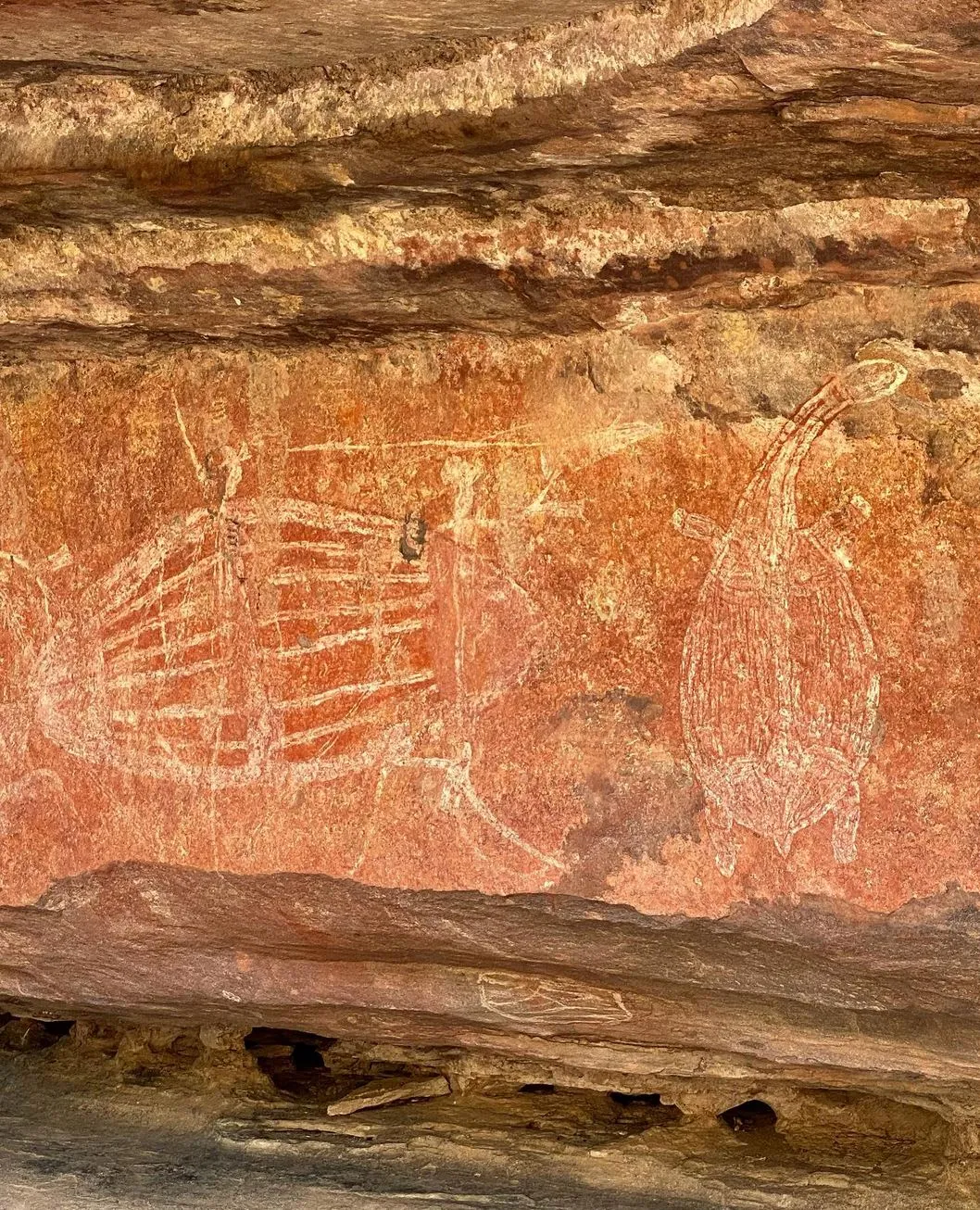
The rock art is a living connection between people and Country. For Aboriginal communities each rock wall and stone palette is a story told by the ancestors and the obligation to keep those stories alive. This cultural heritage is tied to identity and is reflected in ceremonial life, language and daily practice.
Visitors are encouraged to respect the cultural protocols surrounding sacred sites and to learn from Aboriginal guides who share the meaning behind the artworks. Tours with companies like Autopia Tours offer respectful and educational experiences that help bridge the cultural gap.
If you’re short on time but still want to experience this cultural treasure then a Darwin to Kakadu day trip is a convenient and enriching way to see the rock art sites, wildlife habitats and natural wonders in one trip.
Nearby Destinations to Explore
While exploring Kakadu’s cultural sites visitors can also discover other amazing destinations. Jim Jim Falls has a stunning view of towering cliffs and crystal clear plunge pools perfect during the dry season. Maguk Gorge another nearby highlight is a serene swimming hole and scenic walk through monsoon forests. These places like the rock art sites themselves are part of the interconnected landscape that has supported Aboriginal life for thousands of years.
FAQ
How old is the rock art in Kakadu?
Some of the rock art is over 20,000 years old making it one of the oldest continuous artistic traditions in the world.
What do the paintings show?
The paintings depict Aboriginal life, human figures, animals, creation stories and interactions with white people, reflecting cultural and environmental changes over time.
Why is the rock art considered sacred?
These are sacred sites tied to Dreaming stories and ceremonial life. They are visual markers of land ownership, spiritual belief and ancestral law.
Can visitors see these sites?
Yes the famous rock art galleries at Ubirr and Nourlangie are open to the public and have interpretive signage or guided tours by Aboriginal people.
What threatens the preservation of the art?
Weathering, human interference and environmental damage such as lightning storms and erosion threaten the longevity of the rock paintings so conservation efforts are underway.